“My Heart Told My Brain I Needed to Sleep”
What We Discovered About Sleep and Heart Attacks
If you’ve ever had a terrible flu, you know the feeling: your body just wants to shut down and sleep. It turns out, something very similar happens when your heart is injured — not just because you’re tired, but because your body is trying to protect you.
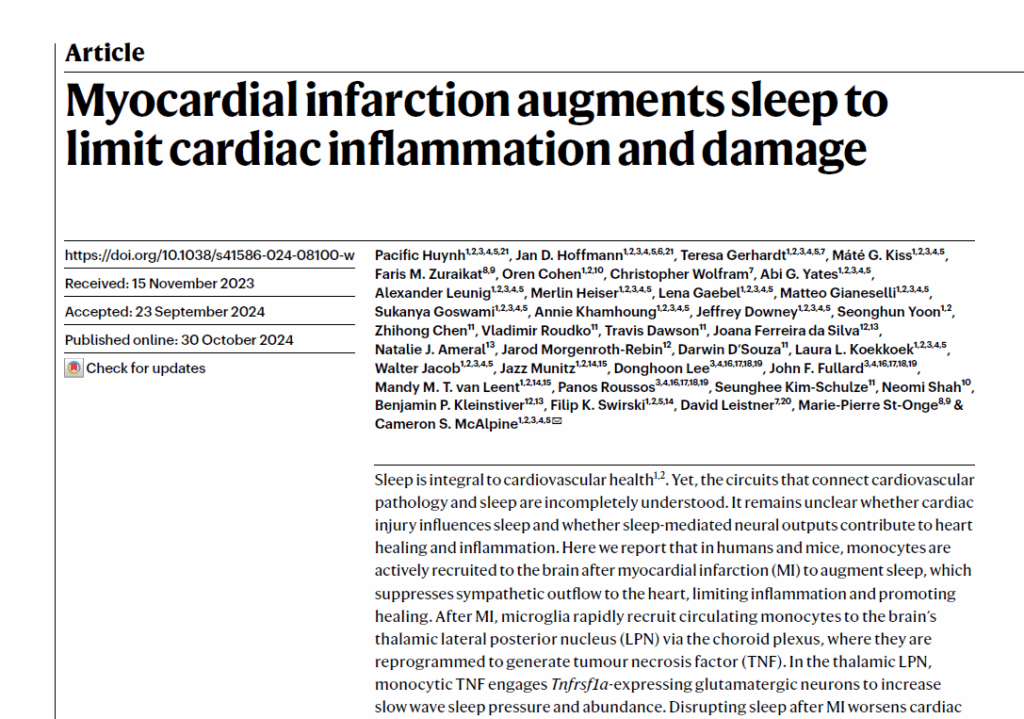
I’ve spent the last few years studying the complex relationship between the brain, the immune system, and the heart. As a researcher and someone deeply curious about how the body heals, I’ve always believed that sleep was more than just rest — that it played an active role in recovery. But I didn’t expect to uncover just how essential sleep becomes after a heart attack — or that the heart itself helps initiate it.
Let me walk you through what we found.
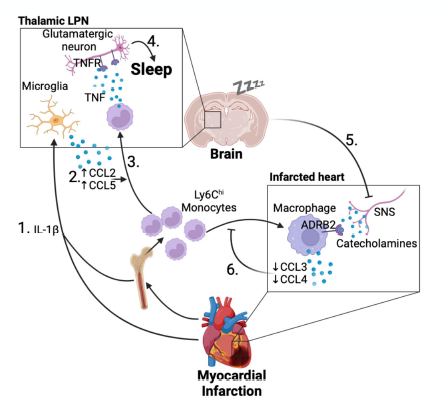
The Body’s Emergency Response: After a heart attack (medically called a myocardial infarction or MI), the heart suffers real damage — parts of it may stop receiving blood, cells begin to die, and inflammation kicks in fast. But what shocked us was discovering that the heart doesn’t just signal the immune system to help repair the tissue — it also sends messages to the brain to promote sleep.
That’s right — your injured heart, through a remarkable chain of biological events, starts orchestrating changes in the brain that make you sleep more. Specifically, it recruits immune cells called monocytes from the blood into a tiny region of the brain called the thalamic LPN — a kind of sleep command center.
Once these cells arrive, they produce a molecule called TNF, which increases what’s known as slow-wave sleep — the deep, dreamless sleep we associate with healing. It’s the kind of sleep that lowers your heart rate, calms your nervous system, and allows your body to do some of its most important repair work.
Sleep as Healing — Not Just Rest
What’s fascinating is that this sleep doesn’t seem to be a side effect of being ill — it’s a deliberate, orchestrated response. In both mice and humans, we saw that this post-heart attack sleep is longer, deeper, and more rhythmically disrupted from the usual wake-sleep cycle. The body chooses recovery over routine.
And when we interfered with that sleep — either by blocking the immune-brain communication or by simply disrupting the animals’ sleep cycles — the results were alarming. Heart function got worse. Inflammation skyrocketed. Some animals even died suddenly from arrhythmias, like dangerous forms of ventricular tachycardia.
The heart sends signals to the brain saying, ‘Slow down, rest — I need time to heal.’
Listening to the Body’s Wisdom
What does all this tell us? It tells me that we’ve been underestimating the intelligence of our own bodies. Sleep after a heart attack isn’t weakness or lethargy — it’s strategy. It’s how the immune system tells the brain to cool the body down, quiet the sympathetic nervous system (that fight-or-flight response), and get to work on healing. It’s not just the brain helping the heart — it’s the heart helping the brain help the heart.
I often think about it this way: your heart, which has been beating tirelessly every second of your life, finally gets hurt — and one of its first acts isn’t just to cry out for help, but to put the whole body into a kind of protective pause. It’s humbling.
So if there’s one thing I want people to take from this research, it’s this: sleep is not optional after a heart attack. It is not just comfort. It is care. It is a biological priority. For patients recovering from cardiac events, making space for deep, consistent, restful sleep could be one of the most important — and overlooked — parts of their treatment plan. In fact, I’d argue it’s just as important as medication, diet, and cardiac rehab. As scientists, we still have much to learn about the intricate ways the brain and heart talk to each other. But what we know now is enough to say: listen when your body says it’s time to rest.
The Science Behind:
Why this matters:
This research reminds us that science isn’t just about molecules in a lab — it’s about understanding how the body protects itself in real, everyday ways. Sleep isn’t a luxury; it’s part of our biology’s built-in survival kit. For me, as both a scientist and a clinician, this work bridges the bench and the bedside. It shows how immune cells, neurons, and organs communicate in ways we’re only beginning to understand — and how those insights can change how we care for patients. Whether it’s guiding recovery after a heart attack or recognizing sleep as a vital sign, this science is about helping people heal smarter, not just harder.
Sometimes the best medicine is simply allowing ourselves to sleep.