Hi, I’m Teresa Gerhardt, Clinician Scientist in Cardiology in Frankfurt
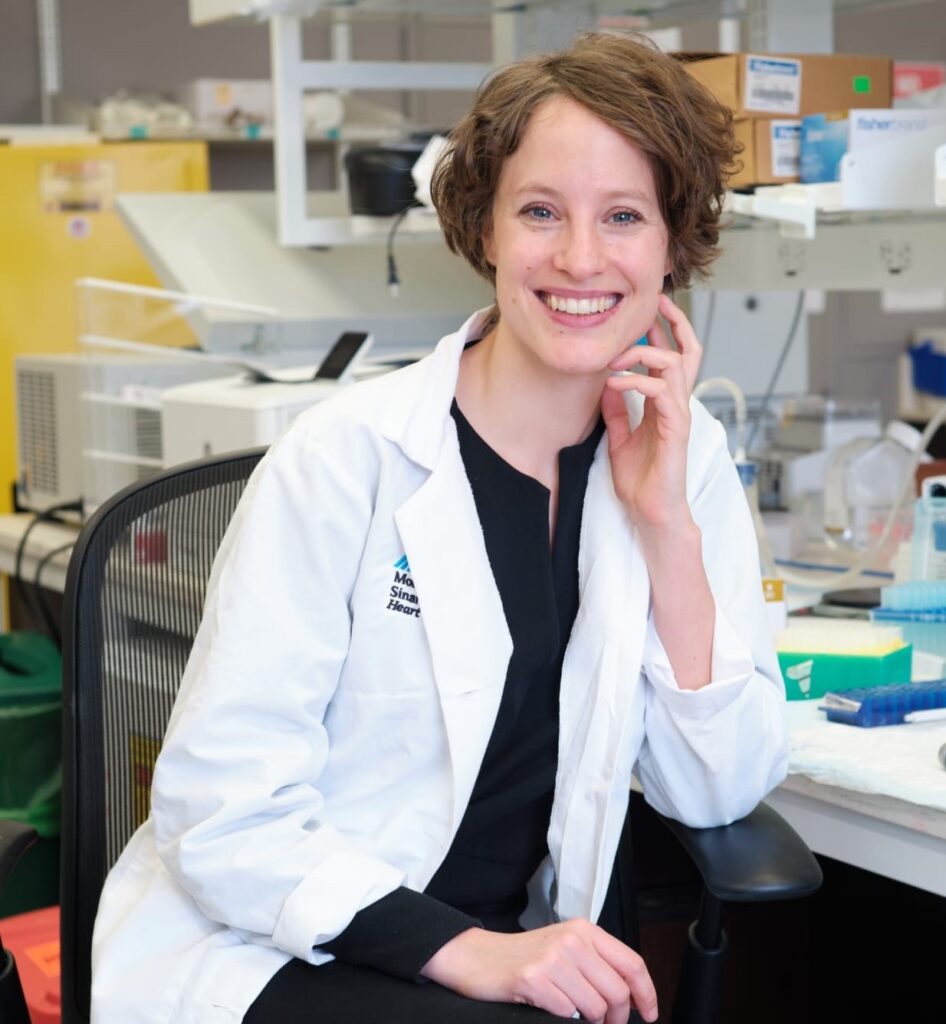
I’m a clinician-scientist with a longstanding interest in the immune mechanisms that drive cardiovascular disease. My scientific journey began during my doctoral research at the La Jolla Institute for Immunology in San Diego, where I investigated how immune responses contribute to vascular pathology. After earning my medical degree from Albert-Ludwigs-University in Freiburg, I joined Charité – Universitätsmedizin Berlin in 2019 as a resident physician in cardiology and clinician-scientist, working at the intersection of patient care and research on inflammatory processes in atherosclerosis.
From 2023 to 2025 I was a postdoctoral fellow in the McAlpine Lab at the Icahn School of Medicine at Mount Sinai in New York, supported by a Walter Benjamin Fellowship of the German Research Foundation. There I studied how lifestyle — sleep, exercise, and activity — shapes the immune system and the course of cardiovascular disease. That work culminated in our 2026 Nature paper showing that sleep and exercise can restrain the clonal expansion and atherogenic behaviour of blood cells carrying clonal hematopoiesis mutations.
Since July 2026 I have been a Clinician Scientist in the Department of Cardiology at University Hospital Frankfurt, supported by the German Centre for Cardiovascular Research (DZHK) and the Cardiopulmonary Institute. I am building a research programme that connects two threads of my previous work: the immune biology of the unstable coronary plaque, and the systemic, lifestyle-sensitive processes in the bone marrow that feed it — with the goal of phenotyping plaques and their inflammatory risk from the blood.
As both a physician and a researcher, I aim to translate mechanistic insight into practical strategies for preventing and treating cardiovascular disease. My work is guided by the conviction that a deeper understanding of immune processes will pave the way for more precise and personalised cardiovascular medicine.
From the bone marrow to the coronary plaque—tracing the immune drivers of vascular disease.
Cardiology at University Hospital Frankfurt
The Department of Cardiology at University Hospital Frankfurt combines a high-volume interventional and acute cardiac care programme with translational research on coronary disease, heart failure, and cardiovascular prevention. My work here is embedded in the DZHK and the Cardiopulmonary Institute (CPI), and continues my collaborations with the OPTICO-ACS consortium and the McAlpine Lab in New York.
Previously:
The McAlpine Lab at Mount Sinai