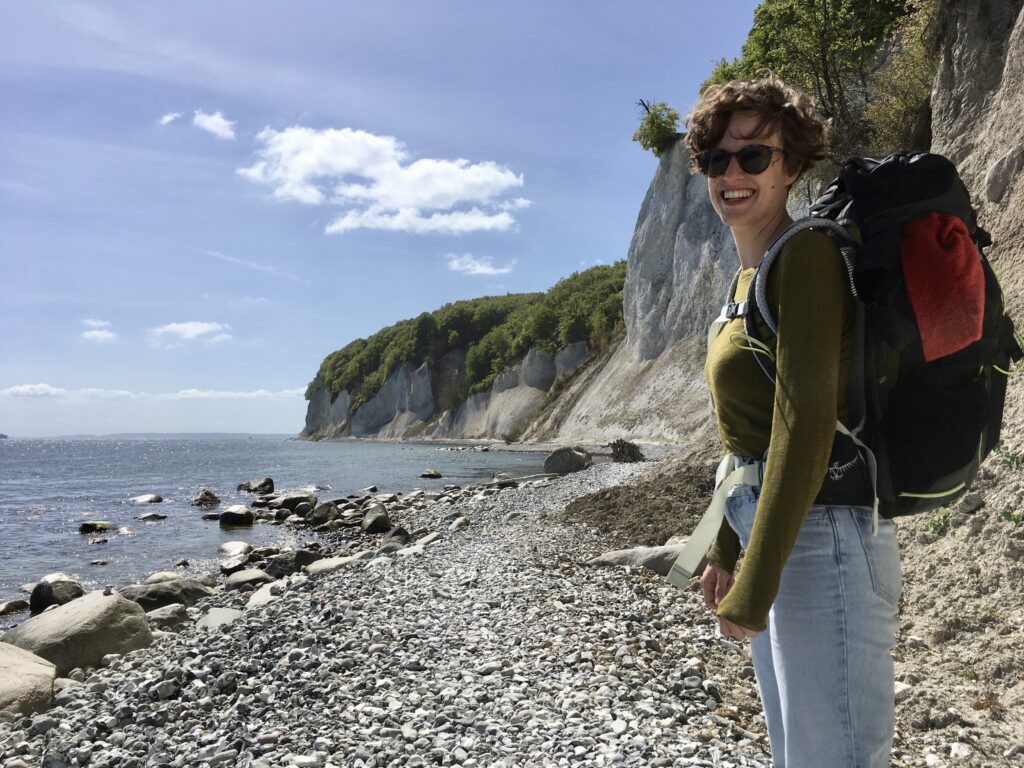
I’m a cardiologist at heart and a scientist by training—my work lives at the intersection of both.
My Scientific Journey
I have now returned to the clinic in Frankfurt while continuing to run my own research programme — my identity as a cardiologist and as a scientist have always been inseparable.
After earning my medical degree from Albert-Ludwig University in Freiburg, I trained and worked as a cardiologist at the Charité in Berlin, one of Europe’s leading medical centers. My clinical experience has been central to how I approach research: I’ve seen firsthand the complexities of cardiovascular disease in patients, and I bring those questions back to the lab. I plan to return to clinical work again—my identity as a cardiologist and a scientist are deeply connected.
Frankfurt
Since 2026 I have been a Clinician Scientist in the Department of Cardiology at University Hospital Frankfurt. My group’s work brings together the two halves of my training: characterising the immune microenvironment of culprit coronary lesions — distinguishing plaque rupture from plaque erosion, which look alike clinically but behave very differently — and understanding how systemic, modifiable factors upstream in the bone marrow shape that microenvironment. A central ambition is plaque phenotyping by liquid biopsy: reading the biology of a lesion from a blood sample rather than only from an image.
Mount Sinai in New York
From 2023 to 2026 I worked in the McAlpine Lab at Mount Sinai, exploring the emerging connections between the brain, the bone marrow, and the immune system. We asked a deceptively simple question: does how we live change what our immune cells do? The answer turned out to be more specific than expected. In work published in Nature in 2026, we found that sleep and exercise act selectively on blood stem cells carrying clonal hematopoiesis mutations — and that the effect depends on which mutation a cell carries.
Alongside the science
I built this research programme across two continents and two parental leaves, with the support of a DGIM grant for balancing research and family. I mention it because early-career researchers rarely see that path described plainly — and it is a normal, workable one.